almagrosherri

Youth Sports & Fitness Fort Bragg

The Youth Sports & Fitness Program provides team sports, individual sports, fitness and health programs, and programming in the Child Development Centers, School Age, and Youth Programs. Pre-registration is required for all Sports & Fitness programs. Children and Youth that are currently registered in CYS can be enrolled in Sports & Fitness programs online via WebTrac.

>> To view current programs being offered by Youth Sports & Fitness, visit WebTrac.

Sports Physical

A Sports specific physical must be completed annually, prior to the start of the sports season. The form must be completed with a doctor’s signature and stamp and submitted to Parent Central Services during registration. Hint: The best time to get your child’s physical, if possible, is in July so your child’s physical will be valid for all sports for one full year.

To access the required Sports Physical Form, visit WebTrac online services.

Evaluation of Coaches

The National Alliance for Youth Sports (NAYS) has a website for evaluation of coaches. Parents have the opportunity to evaluate coaches on the NAYS website: NOTE: Parents must have the coach member number to rate their coach. You can get this number from the CYS Services Sports & Fitness office.

Maps and Field Layouts

Volunteer Coaches Needed

We are always looking for adult volunteer coaches!

Volunteering as a youth sports coach provides youth the opportunity to participate, develop fundamental skills, and grow in an atmosphere of sportsmanship, citizenship, and teamwork.

We are currently seeking coaches for:

  • Cheer
  • Flag Football
  • Girls Volleyball
  • Basketball
  • Soccer
  • Lacrosse
  • Baseball
  • Track and more!

Contact Youth Sports & Fitness to see about becoming a coach.

Coach application packet (.pdf)

Youth Sports & Fitness Fort Bragg Read More »

Sexual Harassment/Assault Resp. and Prev. Fort Bragg

Sexual Harassment/Assault Resp. and Prev.

If you need help now:Call the Ft. Bragg SHARP Hotline:
+1 (910)584-4267This number is the installation’s hotline (available 24/7) for victims or survivors of sexual assault or harassment.

SHARP (Sexual Harassment/Assault Response and Prevention Program)
The Armed Forces’ Sexual Harassment/Assault Response and Prevention (SHARP) Program is the Armed Forces’ integrated, proactive effort to end the crimes of sexual harassment and sexual assault within our ranks. Sexual harassment and sexual assault have no place in the Armed Forces. If you have been the victim of sexual harassment or sexual assault, you have a voice, you have rights, and we’re here to help.

The Armed Forces’ SHARP Program also:

  • Permeates the Armed Forces structure from the Pentagon down to the individual Soldier level.
  • Has full-time military and civilian staff at the brigade level and higher.
  • Promotes cultural change across the Armed Forces, with a vision toward a culture of dignity and respect in which Soldiers, Civilians, and Family Members intervene in potential situations that could result in sexual harassment and sexual assault to protect one another.
  • Includes a comprehensive effort to educate leaders and Soldiers about sexual harassment and sexual assault.
  • Employs a concrete training program that teaches Soldiers and Civilians to be alert to serial offender tactics, to intervene to stop incidents and disrupt offenders, and where and how to seek help.
  • Provides commanders with the essential resources, education, and training they need to succeed in bringing an end to sexual harassment and sexual assault within their units and build a command culture in which these crimes are not tolerated.

We have certified Sexual Assault Response Coordinators (SARCs) and Victim Advocates (VAs) available 24/7 to help with reporting, victim support, prevention, training, and awareness efforts.

For more information about SHARP, visit sexualassault.army.mil.


More Helpful Resources:

  • U.S. Armed Forces Sexual Assault Prevention & Response Program
  • U.S. DoD Sexual Assault Prevention & Response
  • National Sexual Assault Hotline: +1 (800)656-HOPE (4673)
  • Center for Sex Offender Management
  • Men Can Stop Rape +1(202) 265-6530
  • National Center on Domestic & Sexual Violence (military resources) +1 (512)407-9020
  • National Sexual Violence Resource Center +1 (877)739-3895
  • Rape Abuse & Incest National Network +1 (800)656-4673 ext. 3
  • Rape & Sexual Assault: Reporting to Police & Medical Attention, 1992-2000, Bureau of Justice Statistics, US DoJ
  • Sexual Assault Nurse Examiner/Sexual Assault Response Team
  • Sexual Assault State Coalitions

Check out this Military One Source link for additional support.

Sexual Harassment/Assault Resp. and Prev. Fort Bragg Read More »

Army Emergency Relief Fort Bragg

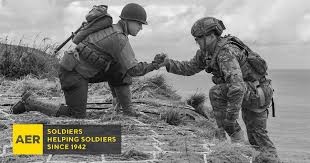
Army Emergency Relief (AER) is a private nonprofit organization incorporated in 1942 by the Secretary of War and the Army Chief of Staff. The mission of AER is to provide emergency financial assistance to Soldiers and their Families.

New policyAll ranks are now allowed to sign their own AER Form 101 application (as long as it is not a Commander and First Sergeant Quick Assist Option). This policy change allows E4 and below the opportunity to come to AER and process an application without the Command signature for approval. Set stipulations apply.

AER Loan Application

AER FM 101 Application (.pdf)

What Can AER Do?

Help with emergency financial needs for:

  • Food, rent, or utilities
  • Emergency transportation and vehicle repair
  • Funeral expenses
  • Medical/dental expenses
  • Provide college scholarships to children, spouses, and surviving spouses of Soldiers.

Scholarship Opportunities:

  • Dependent Children Scholarship Program
  • Spouse Scholarship Assistance Program
  • Eligibility requirements and applications can be obtained at Army Emergency Relief (AER).

Additional Benefits:

  • Lifetime membership in the Army and Air Force Mutual Aid Association (AAFMAA) of Soldiers who die on active duty
  • Grants for wounded Soldiers medically evacuated from a theater of combat
  • Personal Financial Management Training for Soldiers in AIT

Who is Eligible?

  • Active-duty Soldiers, single or married, and their Family members
  • Army National Guard and Army Reserve Soldiers on continuous active duty for more than 30 days and their Family members (Title 10, USC)
  • Soldiers retired from active duty for longevity or physical disability, and their family members
  • Army National Guard and Army Reserve Soldiers who retired at age 60, and their Family members
  • Surviving spouses and orphans of Soldiers who died while on active duty or after they retired

New Home School Assistance Program

Call +1 (910)907-3410 or +1 (910)396-0847 or email us, using the blue “Email Us” button, located at the top of this page (in the Contact section).

Army Emergency Relief Fort Bragg Read More »

Soldier and Family Readiness Group Center Fort Bragg

The Army Community Service Soldier and Family Readiness Group (SFRG) Center serves the Fort Bragg Community. Soldiers and Families now have a location where it is possible to host meetings, schedule a VTC (secure and unsecured), utilize computers, printers, copiers, and much more! Staff members are always available to assist you. Come by today! View the Soldier and Family Readiness Group Center brochure (.pdf).

What is an SFRG?

A Soldier and Family Readiness Group is a command sponsored organization of family members, volunteers, soldiers, and civilian employees belonging to a unit, that together provides an avenue of mutual support and assistance and a network of communications among the family members, the chain of command, chain of concern, and community resources.

What is the Unit Commander’s role in the SFRG?

The Army Command Policy 600-1 (Feb. 2006) and The Army Leader’s Desk Reference for Soldier/Family Readiness provide specific guidance for the command roles. Additional material is provided in the Pre-Command Course & other FRG related Training.

  • Commander
  • First Sergeant
  • Command Sergeant Majors

What is the Role of SFRG Leader?

The SFRG leader should be a person in a non-deployable status, preferably a spouse. Often, the SFRG leader is the commander’s spouse, though not always. Any spouse in the unit who is willing and able to lead the efforts of the SFRG can serve as SFRG leader. The commander may select the leader, or the leader may be elected by the SFRG membership. Either way, the commander prepares and signs appointment orders for the leader. However, after the SFRG leader is selected, he or she needs to obtain the proper training.

The Army Leaders’ Desk Reference for Soldier/Family Readiness defines the SFRG Leader roles as:

  • Supports the commander’s family readiness goals
  • Provides overall leadership of the SFRG
  • Recruits other volunteers to serve on SFRG committees
  • Delegates SFRG responsibilities to selected volunteers as committee chairpersons or preside over their elections
  • Serves as a member of the battalion-level steering committee
  • Identifies needs or unique problems of unit families
  • Acts as unit SFRG spokesperson for communicating family members’ concerns and ideas to the unit commander and, if needed, the battalion-level SFRG leader

The SFRG is not a one-person job, therefore, additional volunteers need to be recruited in order to build a team that works together for the good of the families in the unit. Consult the Fort Bragg SFRG Leaders Handbook for other typical volunteer positions (PAGE 64) and SFRG Job Descriptions (page 65).

Additional information is also discussed in the SFRG Leader Essentials and SFRG Leader Advanced Courses.

What is the Role of Family Readiness Support Assistants (FRSA)?

The Family Readiness Group Assistant Program (FRAP) is a link between Soldiers, families, Family Readiness Groups, and community resources.

Their job is to assist the command in properly and effectively responding to soldier and family needs by:

  • Providing information and referrals to families who need assistance to the appropriate installation/community resources
  • Scheduling and coordinating training
  • Assisting in establishing and updating SFRG rosters
  • Working with the Rear Detachment Commanders to provide FRG leaders with timely and accurate information
  • Providing assistance with the preparation of pre-deployment, sustainment, and reunion activities
  • Assisting with FRG newsletters and websites
  • Helping to lighten the volunteer load

How do I register and log my hours as a volunteer?

Visit the Army Volunteer Corps page for more information.

What are the requirements for SFRG’s Inspections?

An inspection conducted by a detailed IG oriented toward the identification of problems, determination of their root causes, development of possible solutions, and assignment of responsibilities for correcting the problems. Generally, IG inspections focus on issues rather than on units. The scope and content are determined by the commander to whom the inspector general is assigned (CG, XVIII Abn Corps). The Corps IG serves as the proponent of the XVIII Airborne Corps’ ORA Program (Organizational Readiness Assessment).

Training and Evaluation Outline is available online. Commanders or another designated service member must be present at the ORA.

SFRG Regulations

Appendix J of AR 608-1 was released in December of 2006. Appendix J outlines FRG Roles and functions; resources available to FRGs; fundraising guidelines, donations; and the budget process. Anyone looking for guidance or answers to FRG-related matters should refer to Appendix J or the Commander or Ethics Counselor.

Operation R.E.A.D.Y (Resources for Educating About Deployment and You) is a training resource that was developed after the Persian Gulf War from lessons learned in deployment. ACS provides the following OPREADY-based training:

  • Care Team Training – Learn how to establish this team to prepare for trauma in the unit, whether it’s a family member or Soldier.  Positions on a Care Team include home care, meal assistance, transportation, phone call support, and childcare assistance.
  • SFRG Essentials Course – Provides information on the Soldier/Family Readiness Group and how to effectively run the organization.
  • FRG Power course – Includes SFRG Essentials Course, SFRG Key Caller Training, and SFRG Treasurer Training – all in one!
  • Key Caller Training – Designed to provide training in Key Caller duties, communicating with Family members, dispelling rumors, handling crisis calls, etc. It also shows Key Callers how they fit into a successful SFRG.
  • Treasurer Training – Designed for SFRG Leaders, Treasurers, Command representatives, and anyone else who manages SFRG money. It covers the various funds available and details the types of purchases that can be made with each fund.

SFRG Resources (SOPs, Templates and more)

Soldier and Family Readiness Group Center Fort Bragg Read More »

Relocation Readiness Program Fort Bragg

Moving is a part of life for Soldiers, civilian government employees, and their Families. The Army Community Service Relocation Readiness Program is here to help with a comprehensive support system, whether it’s your first move or the last of many. We have all kinds of information and resources to help you and your family navigate your next military move.

Your first stop should be your local Army Community Service Family center to meet with a Relocation Readiness Program Manager who can get you started.

For more on the Hearts Apart program or to be included on our distribution list, contact +1 (910)396-8683 or +1 (910) 907-3327.

Welcome Packet Request
Would you like to receive a Welcome Packet? We can send you one by mail!

Please email us your name, address, and arrival date. Also please let us know if you are bringing a spouse, the number and ages of children, and if you have any pets so that we can get the appropriate resources to you!

Be sure to put the text “Welcome Packet” in the subject line of your email.

Classes/Tours
PCS Pre-Move Briefing CONUS/OCONUS 2020 (.pdf)

PCS Pre-Move Briefing CONUS/OCONUS 2021 (.pdf)

Newcomers Orientation & Bus Tour 2020 (.pdf)

Newcomers Orientation & Bus Tour 2021 (.pdf)

Multi-Component Family Support Network
Multi-Component Family Support Network is a seamless array of Family support services that can be easily accessed by the Soldier and Family, regardless of component or location. We work in concert with other military and civilian agencies to establish a comprehensive multi-agency approach for community support and services to meet the diverse needs of the Active Military and mobilized Reserve Components families. We can provide information and points of contact for the Wounded Warrior Program, medical, Employer Support of the Guard and Reserve (ESGR), legal, school transition, and more. Our goal is to provide the military Family with support where they live. The MCFSN supports the Family readiness needs and provides consistent Family services during extended deployments to Military Families regardless of their component or location.

For more information on this program, contact us at +1 (910)907-3499.

Additional Resources

Relocation Readiness Program Fort Bragg Read More »

Victim Advocacy Program Fort Bragg

The Victim Advocacy Program (VAP) provides emergency and follow-up support services to adult victims of domestic abuse. Advocacy services are available to Service members, their current or former spouses, an individual with whom the Service member shares a child, and significant others of Service members who live together. Our services are available twenty-four hours a day, seven days a week.

Our trained professionals are here for crisis response, information on reporting options, medical treatment options, law enforcement’s response, emergency services, safety planning, obtaining military and civilian protective orders, and accompaniment to medical forensic exams and medical appointments, as well as an accompaniment to court for orders of protection hearings and trials. Advocates work closely with their civilian counterparts and ensure a personal and smooth transition for victims who do not qualify for ongoing advocacy services within the military community.

If you need help or want more information, contact the Victim Advocacy Program Manager at your local Army Community Service Center.

Reporting Options

The Army is fully committed to ensuring victims of domestic abuse are protected; treated with dignity and respect; and provided support, advocacy and care. The Army strongly supports effective command awareness and prevention programs and holding offenders accountable.

There are two types of reporting options: Restricted Reporting and Unrestricted Reporting. Personnel should report all suspected cases of domestic abuse promptly, which quickly activates victim services and accountability actions. However, we understand things might not always work that way. Victims might need medical attention or victim services without command or a law enforcement response. Therefore, the Army has implemented a Restricted Reporting Option for victims to confidentially disclose allegations of abuse and receive needed medical treatment and services.

Restricted Reporting

Allows someone who meets VAP criteria and who is experiencing violence in his/her relationship to confidentially disclose the abuse to a Victim Advocate, a Victim Advocate Supervisor, or a Healthcare Provider. When an individual chooses a restricted report, law enforcement is not involved and there is no investigation of the abuse. In addition, the Soldier’s Command is not notified of the abuse and is unable to offer assistance and protection.

The restricted reporting option allows an individual to receive medical treatment, advocacy services, and clinical and pastoral counseling. This option allows one to receive needed services, control the release of his/her personal information, and time to consider his/her options.

Under this reporting option, the offender is not held accountable and the abuse may continue. If an assessment reveals a high risk for future injury, a restricted report may not be granted.

Unrestricted Reporting

Victims of domestic abuse who want to pursue an official investigation of an incident should report the abuse to law enforcement, or the alleged offender’s Commander. The unrestricted reporting option provides a victim with the widest array of services available including but not limited to command involvement, law enforcement involvement, medical treatment, advocacy services, and counseling services.

Not all incidents of domestic abuse are the same, and each person who experiences domestic abuse handles the situation differently.

Command Response

Commanders play an integral part in ensuring the safety, health, and well being of our Army Families. Commanders who learn of an incident of domestic abuse are required to notify law enforcement.

Victim’s Rights

  • The right to be treated with fairness and with respect for your dignity and privacy.
  • The right to be reasonably protected from the accused offender.
  • The right to be notified of court proceedings.
  • The right to be present at all public court proceedings related to the offense, unless the court determines that your testimony would be materially affected if you, as the victim, heard other testimony at trial.
  • The right to confer with the attorney for the government in the case; the right to available restitution; the right to information about the conviction, sentencing, imprisonment, and release of the offender.

Safety Planning

A violent relationship puts you and your children at risk for injury and even death. Developing a safety plan tailored to meet the needs of your family will enable you to get out of a potentially dangerous situation. If your children are old enough, mature enough, or even responsible enough to assist you during a violent or potentially violent episode of domestic abuse, you may consider including them in your plan to keep everyone safe. A good safety plan considers which steps to take if you choose to stay in the relationship or if you choose to leave.

Here are some tips during the explosive phase of domestic abuse:

  • Move to a room with easy access to an exit. Don’t go to the kitchen, bathroom, or near possible weapons.
  • Know the quickest route out of your home. Practice escaping that way.
  • Know the quickest route out of your workplace. Practice escaping that way. Domestic violence does not just occur in your home.
  • Pack a bag and have it ready. Keep it hidden but make it easy to grab quickly.
  • Tell your neighbors about your abuse and ask them to call the police when they hear a disturbance.
  • Have a code word to use with your kids, family, and friends. They will know to call the police and get you help.
  • Know where you are going to go if you ever have to leave.
  • Use your instincts.
  • You have the right to protect yourself and your children.

Develop a Safety Plan

Protection Orders

Military Protection Orders (MPO)
Unit Commanders may issue a Military Protective Order (MPO) to ensure the safety of service members, family members, and other individuals from the threat of domestic violence. An MPO is a written lawful order issued by a commander that orders a Soldier to avoid contact with his or her spouse or children. The commander should provide a written copy of the order within 24 hours of its issuance to the protected person, the Military Police, and civilian law enforcement. An individual should report violations of the MPO to law enforcement.

Civilian Protection Orders (CPO)
A Civilian Order of Protection is an order signed by a Judge that directs an individual to stop abusing, stalking, harassing, and/or committing acts of sexual violence against an individual. An individual may file a CPO against a current or former spouse, someone that an individual shares a child in common with, an individual with whom you have shared a residence with, someone related to you by blood or marriage, or someone with whom you have dated or had intimate relations.

National Resources

  • United States Department of Justice Office on Violence Against Women
  • National Center on Domestic and Sexual Violence
  • Stalking Resource Center
  • Statewide directory for laws, courts, emergency shelters, orders of protection
  • Battered Women’s Justice Project
  • The Family Violence Prevention Fund
  • Women’s Justice Center– Also in Spanish
  • Mind, Body, Spirit Empowered – Materials translated into many languages
  • Marriage and Equality – Materials translated into many languages

What is Partner Abuse?

Take the Relationship Quiz (.pdf) to find out more about your relationship.

Partner abuse is defined as a pattern of behavior resulting in emotional/psychological abuse, economic control, and/or interference with personal liberty. In other words, spouse or partner abuse can include something as obvious as a slap or a hit but also includes less noticeable controlling, threatening, or emotionally abusive behaviors. No one needs to stay in a relationship where they are being physically or emotionally abused by their partner or spouse. Visit the National Coalition Against Domestic Violence to learn more.

What help is out there for a victim?

Victim Advocates are available for any Soldier, Family member, or retiree who is in an abusive relationship and needs help. Victim Advocates will help you make an immediate and on-going safety plan, provide victims with information about their rights and reporting options, link victims to Military and Civilian resources, and provide support and advocacy to include accompaniment to medical appointments, court proceedings, and interviews with attorneys, police, and/or command. You can speak with a Victim Advocate by calling or visiting our office during regular scheduled hours. There is also a Victim Advocate available 24/7.

Family Support is available if a Soldier/Offender is Discharged/Separated from the Army or Jailed Because of Abuse: A program called Transitional Compensation will provide an offender’s family with monthly payments, medical benefits, and access to the PX and Commissary for three years. This benefit is in place for victims who might stay with an abusive spouse out of fear of losing money, healthcare, and housing. Contact a Victim Advocate to ask about this program – there are selection criteria to meet in order to be eligible. Learn more about Transitional Compensation (.pdf).

Hotlines and Local Resources

These are just a few of the centers that offer private, supportive information on how to heal the relationship or how to safely leave it, depending on the victim’s desire. In many cases, the caller may be told that they can give their name, come in for help, and still receive private information, medical care, and other support without having to initiate a Family Advocacy assessment, tell command or make a police report. Get more information on what military help (.pdf) is available.

Many foreign-born victims may have been threatened by their spouse that they will be deported or lose citizenship if they tell about the abuse. The Multicultural Readiness Program can help foreign-born spouses find help and supportive friends. Visit the Multicultural Readiness Program for more information on this program.

What about my privacy? Do I have a choice?

Yes! All incidents of domestic violence should be reported, however, there are two options to get help: restricted or unrestricted reporting.

  • Restricted reporting allows the victim, on a confidential basis, to disclose the abuse only to certain individuals (Victim Advocate, Healthcare Provider, or Military Chaplain) to receive medical care, counseling, and supportive services. This option can only be given when there is not a threat of serious or possible harm to the victim. Neither law enforcement nor command will be contacted.To make a restricted report

    : contact a Victim Advocate or call the 24-hour hotline at the top of this page.

  • Unrestricted reporting allows the victim to receive medical care, counseling, and supportive services, and the abuse is reported to Law Enforcement and the Soldier’s command. An investigation is completed to ensure the safety and well-being of the victim and other family members who may be at risk of harm.In cases where there is an obvious danger of the imminent threat of harm or the presence of child abuse, a Victim Advocate or Healthcare Provider may be required to notify others to ensure the safety of all persons involved in the abusive situation. Anyone needing information or help for situations involving a partner or spouse abuse, but is worried about their case being reported to command or Law Enforcement or about protecting their privacy, should still call someone. Victims can ensure their privacy by not giving their names until they feel completely informed about the options they have for getting help. Contact us Monday-Friday 8 a.m.-5 p.m. or call the 24-hour hotline at the top of this page any time to find out more about victim privacy.

I want to leave this relationship, but how do I do it safely?

Sometimes deciding to leave an abusive relationship is an extremely difficult decision and can be a time when you are more at risk of additional abuse and violence from the abuser. Victim Advocates will assist you with developing a safety plan (.pdf), filing a protective order, and connecting you to a local shelter, if needed. For more information about how to safely leave a relationship, please feel free to contact us. Remember, you do not have to do this alone! Call a Victim Advocate for support. We have support available 24/7.

I’m not a victim, but I suspect that my friend is. What can I do?

The National Domestic Violence Hotline can give great tips and information on how to help a friend. Please consider referring a friend to professional help by asking them to contact the Fort Bragg 24-hour Victim Hotline listed at the top of this page or go to Family Member Behavioral Health at +1 (910)907-7869. Do not attempt to take care of things yourself. Domestic Violence can be a very complex and potentially dangerous issue.  How to help a friend or neighbor that you suspect is being abused (.pdf).

Help for an abusive partner

Many spouses would like to find help for their abusive partner and many abusive partners may welcome this support. There are many counseling options and support groups within the community.  If a partner is being physically abusive, marriage, or couples counseling is often not a good option, but there are many other helpful options for assistance. Please call us for more information.

What is the Commander’s role?

Commanders and other leaders are required to report Family violence, to seek help for all parties involved, and to help ensure safety to the fullest extent possible. Commanders and the military or local police can provide a great deal of effective help, including documenting the abuse, arresting the offender, helping with securing a military or Civilian no-contact/protective order to ensure the victim is safe, helping to find legal assistance, and ordering an offender/Soldier to treatment. Although commanders and leaders are concerned about the safety of Families in their units, they cannot ensure their safety unless they know about the abuse. They also understand that many victims will never come forward unless they have an option that will keep their situation completely private (restricted reporting).

How are children affected by domestic violence?

Children in Family violence situations usually know something is not right, even if they have not directly witnessed a Family violence incident. Many offenders have learned their abusive behaviors from having grown up in an abusive home of their own. Children may display different reactions and coping skills, depending on their age. Younger children may blame themselves for the chaos around them which can create feelings of guilt, worry, and anxiety within the child already suffering unrest. Children may become withdrawn, non-verbal, and exhibit regressed behaviors such as clinging and whining. Eating and sleeping difficulty, concentration problems, generalized anxiety, and physical complaints (e.g., headaches) may also occur. If you would like more information, please contact any of the listed numbers on this page.

Other Resources

Victim Advocacy Program Fort Bragg Read More »