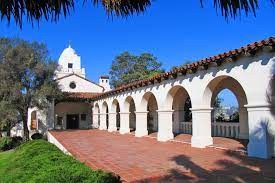
El Campo Santo Cemetery

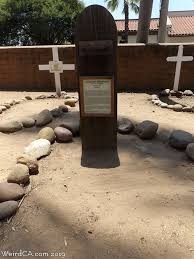
Located in Old Town, the second oldest cemetery in San Diego had burials from 1849 to 1880. In 1933, the San Diego Historical Society restored the cemetery based on descriptions and photographs, but over the years some of the boundaries have been moved to accommodate city development. In 1889 a horse-drawn streetcar line was built through part of the cemetery, which later became San Diego Avenue. In 1942 it was paved over, leaving as many as 18 graves under the street and sidewalk. The Ghosts and Gravestones San Diego Tour takes visitors on an intimate nighttime journey through the cemetery to explain the haunted history of this Old Town landmark.

El Campo Santo Cemetery Read More »

William Heath Davis House

WILLIAM HEATH DAVIS HOUSE

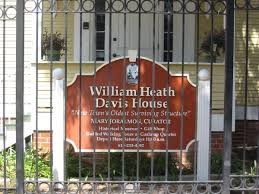
 The William Heath Davis House is considered to be one of the most significant buildings in San Diego’s history. Visitors are intrigued by the exciting stories of the people who lived in it and the fact that it is the oldest wooden structure in San Diego. Its first owner, William Heath Davis, was the first to attempt to develop the new town—yet it was not until Alonzo Horton came along that the true city began to boom. And it is Horton that is credited with being San Diego’s founder. Incredibly, the William Heath Davis House was bought by Alonzo Horton and lived in by him and his wife for several years.

The house is the only known structure left in San Diego that was once Horton’s home.

Used as an officer’s quarters before the civil war, as a county hospital, and as the unconfirmed hideaway for a German spy, people who view the home marvel at its vivid past and the fact that the home was never modified. The William Heath Davis House is now a Historic House Museum and each room represents a historic period of the home and is filled with fascinating and amusing stories about the former inhabitants.

William Heath Davis House Read More »

Chinese Historic District

The San Diego Asian Pacific Historic District, San Diego’s historic Chinatown, is an eight-block district adjacent to and in part overlapping with the Gaslamp Quarter Historic District. The San Diego Chinatown is bounded by Market Street on the north, 2nd Ave. on the west, and 6th ave. on the east and J st. on the south. 22 structures are considered historically contributing.

The City of San Diego designated the area a historic district in 1987.

CHINATOWN

San Diego’s Chinatown began in the area in the 1860s settled by abalone fishermen. The area was once a thriving Chinatown full of Chinese and Chinese Americans who were not allowed to live in other sections of the city. However, the area no longer has an especially large Chinese or Asian population. After the repeal of the Chinese Exclusion Act in 1943 (which banned them from becoming citizens and owning property), and after returning from service in World War II, Chinese Americans moved to other areas of San Diego.

SAN DIEGO CHINESE HISTORICAL MUSEUM

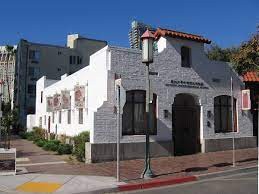
The San Diego Chinese Historical Society was formed to rescue the Chinese Mission building. Built-in 1927, the Chinese Mission Building served as the home of the Chinese Community Church in the historic Chinatown of San Diego. The church building was moved into the Asian Pacific Historic District on Third Avenue and renovated into a museum with an Asian koi pond and garden.

The museum’s exhibits share the heritage of San Diego’s Chinese community and the essence of Chinese arts and culture. Artifacts are on display in rotating exhibits housed at San Diego Chinese Historical Museum’s three buildings: Chinese Mission Building, Dr. Sun Yat-Sen Memorial Extension, and Chuang Archive & Learning Center. All of the buildings are located in the Asian Pacific Historic District.

Chinese Historic District Read More »

Balboa Park San Diego

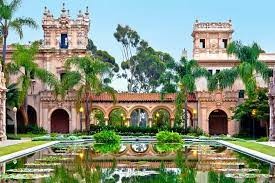
Balboa Park is where the arts, culture, and history of San Diego come together to create a 1,200-acre wonderland filled with unforgettable experiences for people of every age. Thriving botanical beauty flourishes throughout and surrounds 15 museums, a variety of performing arts and musical theaters, exotic gardens, fabulous restaurants, upscale shopping, the San Diego Zoo, and exquisite Spanish Moor architecture. Known as America’s largest urban cultural park, more than 500,000 visitors come each year to delight in the beauty and amazing attractions of Balboa Park.

With 19 gardens, 17 museums, 13 recreation venues, 9 performing arts arenas, 9 various attractions and play spaces, restaurants, dog parks, and trails, San Diego’s Balboa Park offers something for everyone. Balboa Park’s land has been set aside for almost 150 years and has racked up quite an array of family-friendly activities. Beginning in 1868 as City Park, the land now home to San Diego’s most epic green space sat idle for more than two decades before the first beautification projects began. Known as the Mother of Balboa Park, it was Kate Sessions who first offered to plant 100 trees a year and donate foliage within the park’s boundaries in exchange for a small portion of land to be used as her nursery.

Balboa Park San Diego Read More »

Martin Luther King Jr. Promenade

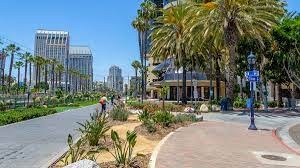
Honoring the slain civil rights leader, the tree-lined Martin Luther King, Jr. Promenade features sculptures like the stainless steel “Breaking of the Chains” by renowned artist Melvin Edwards. There is also a fountain and a hedge maze. Located across from the convention center, the promenade runs adjacent to Harbor Boulevard with its wide assortment of shops and restaurants. The esplanade connects several popular sites along the city’s waterfront. It is the setting for the annual Martin Luther King Day Celebration, which includes food, music, various activities, and other entertainment.

Martin Luther King Jr. Promenade Read More »

Presidio Park

Presidio Park is a historic city park in San Diego, California. It is where the San Diego Presidio and the San Diego Mission, the first European settlements in what is now the Western United States, were founded in 1769.

In 1773 the mission moved a few miles upriver while the fort remained on Presidio Hill. The presidio had been established to protect against Indian attacks or foreign invasions. As the need for such protection disappeared, people preferred to live in Old Town at the foot of the hill, and the fort was gradually abandoned. It was in ruins by 1835.

In 1907 George Marston, a wealthy department store owner, and civic leader bought Presidio Hill with the aim of preserving the historic site. Unable to attract city funding, Marston built a private park (planned by architect John Nolan) including the Serra Museum (designed by architect William Templeton Johnson) in 1925. Marston donated the park to the city in 1929.

The park encompasses about 40 acres (16 ha) and has views of the city, the San Diego River valley, and the Pacific Ocean. The grounds are open for picnics and play. The facilities can be used for weddings and other special events.

The spot in the park where Junípero Serra planted a palm tree when he first arrived in 1769 was declared a California Historical Landmark. Otherwise, no historical structures remain in Presidio Park today. The site is occasionally used for archaeological excavations. A fenced-off area encloses the chapel’s foundations, walls, and other historical sites.

Presidio Park Read More »